
When Communication Stops, Stories Start
In times of uncertainty, people need communication, not necessarily all the answers.
I recently had a 360 moment. I found myself feeling angry, frustrated, disappointed, and increasingly out of control.
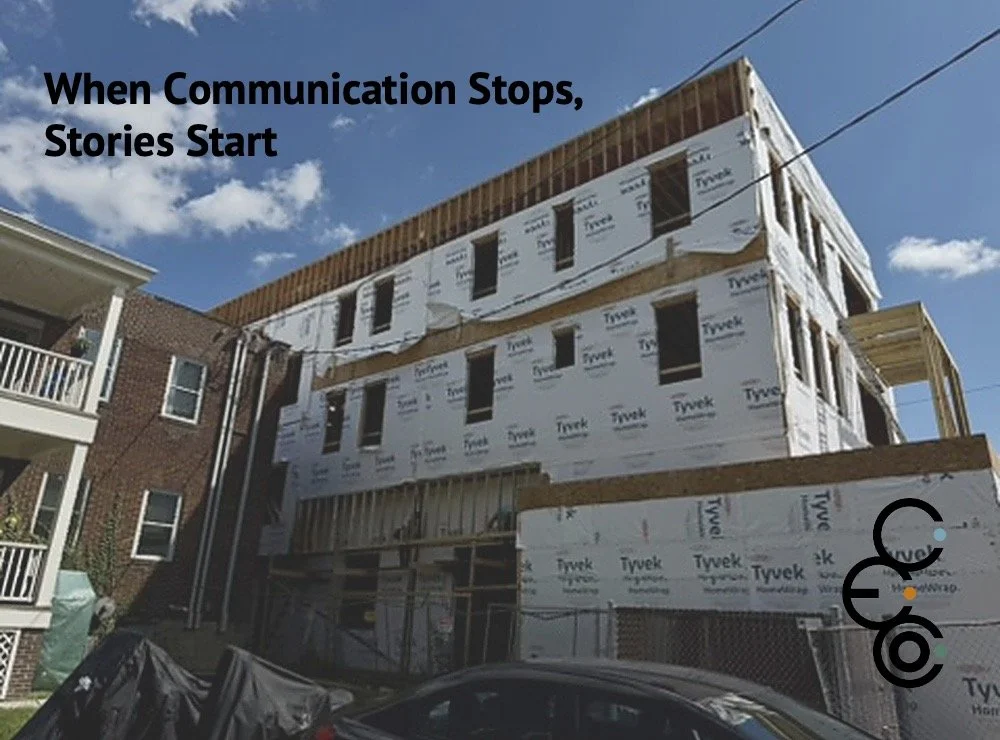
We are waiting for our new condo to be completed. This is more than a construction project. It means selling our home of 26 years, downsizing, and preparing for our next chapter in life.
Then, an accident occurred at the construction site.
There was little communication from the developer about the injured person, construction status, or next steps. In fact, even before the accident, updates only came AFTER we requested them, despite asking for monthly communication.
I'm a planner. I like goals, targets, and timelines. I'm also flexible when circumstances change.
But the uncertainty and silence were getting to me.
And then I caught myself filling in the blanks, creating my own stories:
"The contractor doesn't care."
"They're behind and afraid to tell us."
"Quality and safety will suffer because they'll rush."
"I don't trust them."
None of these were facts. They were stories I was creating in the absence of information.
And that's when my own executive coaching interactions came right back at me.
When leaders don't communicate, especially during uncertainty or ambiguity, people start creating their own narratives.
Those stories can become exaggerated, untrue, and even harmful. And trust begins to erode.
Fortunately, the injured person is recovering, and construction is about to resume. But uncertainty remains, as does some skepticism and distrust.
I'm practicing patience, letting go, and recognizing my own emotional responses. Easier said than done!
A question for leaders: When you don't have all the answers, how are you communicating so others aren't left filling in the blanks?
